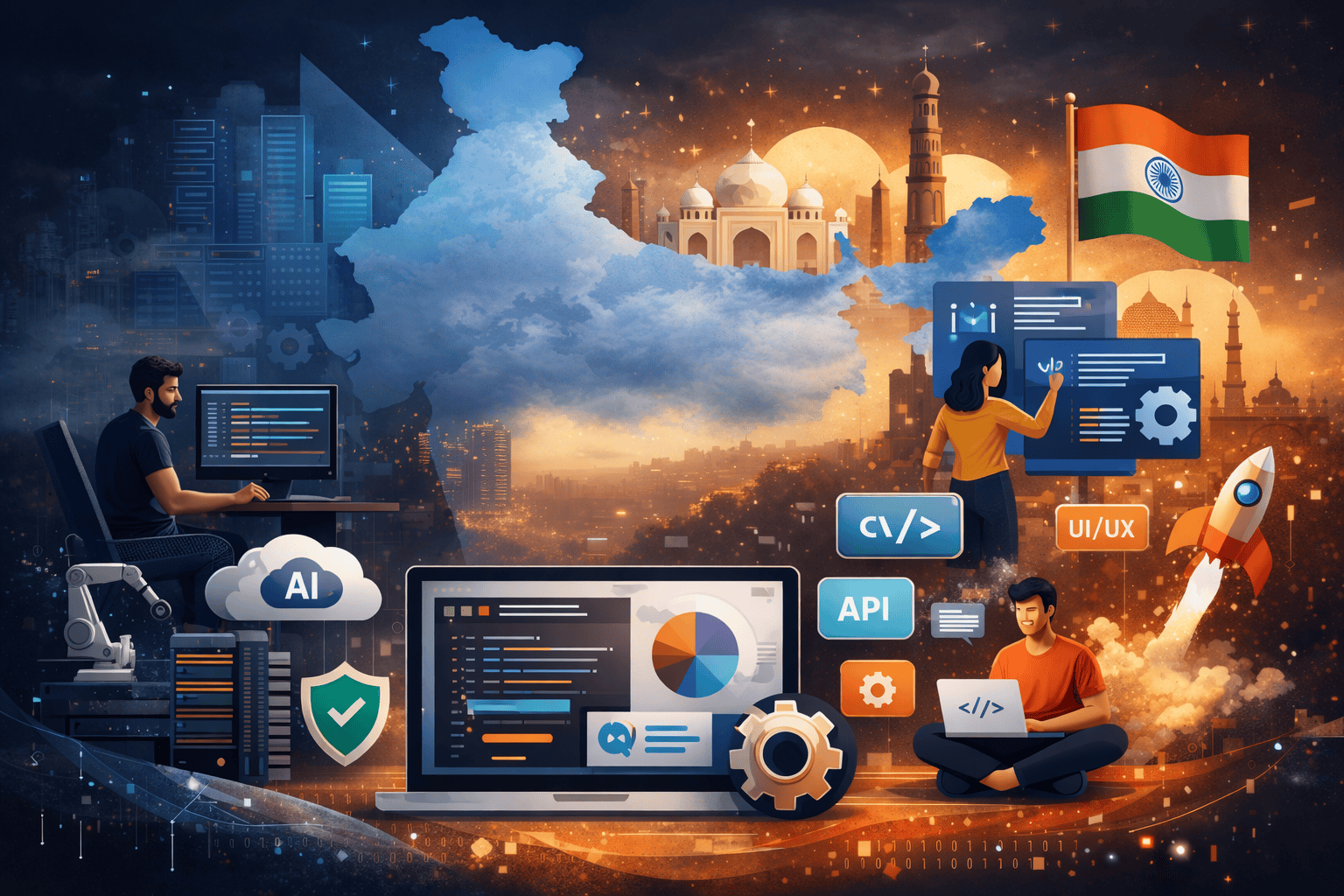
Unlock the potential of your business with custom software development in India. Discover innovative solutions tailored to meet your unique challenges.
The Rise of the Software Development Industry in India
The software development industry in India has witnessed phenomenal growth over the past few decades. What started as a modest sector in the 1980s has burgeoned into a global powerhouse, attracting clients from around the world. Several factors have contributed to this meteoric rise, including a highly skilled workforce, competitive pricing, and a robust technology infrastructure. As a result, India has earned a reputation as a premier destination for custom software development.
One of the key drivers behind this growth is the country’s extensive pool of talented software engineers. India produces a significant number of graduates in science, technology, engineering, and mathematics (STEM) fields each year. These graduates are well-versed in the latest technologies and methodologies, making them highly sought after by companies looking to develop custom software solutions. This abundance of skilled professionals has enabled India to offer high-quality services at competitive rates.
In addition to its skilled workforce, India’s software development industry has benefited from strong government support. Initiatives such as the Digital India campaign and the establishment of numerous tech parks have created an environment conducive to innovation and growth. This support has attracted both domestic and international companies to invest in the country’s software development sector, further solidifying India’s position as a global leader in this field.
Key Benefits of Custom Software Development
Custom software development offers numerous advantages for businesses seeking to address their unique challenges and requirements. One of the most significant benefits is the ability to create tailored solutions that align with a company’s specific needs. Unlike off-the-shelf software, custom solutions can be designed to address particular pain points, streamline operations, and enhance overall efficiency. This level of customization ensures that businesses can achieve their objectives more effectively.
Another key benefit of custom software development is the potential for improved scalability. As a business grows and evolves, its software needs may change. Custom solutions can be designed with scalability in mind, allowing for easy integration of new features and functionalities as needed. This flexibility ensures that the software can adapt to the changing demands of the business, providing long-term value and support.
Custom software development also offers enhanced security. Off-the-shelf software solutions are often targeted by hackers due to their widespread use and known vulnerabilities. In contrast, custom software can be built with robust security measures tailored to the specific needs of the business. This targeted approach helps to protect sensitive data and reduce the risk of cyberattacks, ensuring that the company’s information remains secure.
Understanding the Custom Software Development Process
The custom software development process typically involves several stages, each of which plays a crucial role in delivering a successful solution. The first stage is the discovery phase, during which the development team works closely with the client to understand their needs, goals, and challenges. This phase often involves conducting interviews, workshops, and brainstorming sessions to gather detailed requirements and create a clear project vision.
Once the requirements have been gathered, the development team moves on to the design phase. During this stage, they create detailed blueprints and prototypes of the software, outlining its architecture, user interface, and overall functionality. This phase is critical for ensuring that the final product aligns with the client’s expectations and provides a solid foundation for the subsequent development work.
The development phase is where the actual coding and implementation take place. The development team works in iterative cycles, known as sprints, to build and test individual components of the software. This approach allows for continuous feedback and adjustments, ensuring that the final product meets the client’s requirements and is free of bugs and issues. Once the development is complete, the software undergoes rigorous testing to ensure its functionality, performance, and security.
Choosing the Right Technology Stack
Selecting the right technology stack is a critical decision in the custom software development process. The technology stack comprises the programming languages, frameworks, libraries, and tools used to build the software. The choice of technology stack can significantly impact the software’s performance, scalability, and maintainability, making it essential to choose wisely.
One of the primary considerations when selecting a technology stack is the specific requirements of the project. Different technologies are better suited to different types of applications, and it’s essential to choose a stack that aligns with the project’s goals and objectives. For example, if the software needs to handle large volumes of data and perform complex calculations, a technology stack that supports high-performance computing may be the best choice.
Another important factor to consider is the expertise of the development team. It’s crucial to select technologies that the team is familiar with and experienced in using. This familiarity ensures that the development process proceeds smoothly and efficiently, reducing the risk of delays and issues. Additionally, choosing widely-used technologies can help ensure long-term support and availability of skilled developers.
Top Industries Leveraging Custom Software Development in India
Several industries are leveraging custom software development in India to drive innovation and achieve their business goals. One of the most prominent sectors is the healthcare industry. Custom software solutions are being used to improve patient care, streamline administrative processes, and enhance data management. For example, electronic health record (EHR) systems and telemedicine platforms are being developed to provide better access to healthcare services and improve patient outcomes.
The finance and banking sector is another industry that is benefiting from custom software development. Financial institutions are using custom solutions to enhance their services, improve security, and streamline operations. For instance, custom software is being developed for online banking, fraud detection, and regulatory compliance. These solutions help financial institutions to operate more efficiently and provide better services to their customers.
The retail industry is also leveraging custom software development to enhance customer experiences and optimize operations. Custom solutions are being used to develop e-commerce platforms, inventory management systems, and customer relationship management (CRM) tools. These applications help retailers to manage their operations more effectively, improve customer satisfaction, and drive sales growth.
Cost Considerations for Custom Software Development
Cost is a critical factor to consider when embarking on a custom software development project. The overall cost of development can vary significantly based on several factors, including the complexity of the project, the technology stack used, and the experience of the development team. It’s essential to have a clear understanding of these factors to ensure that the project stays within budget.
One of the primary cost drivers in custom software development is the complexity of the project. More complex projects require more time and resources to complete, resulting in higher costs. Factors that contribute to complexity include the number of features, the level of customization required, and the integration of third-party systems. It’s important to clearly define the scope of the project and prioritize features to manage costs effectively.
Another important consideration is the choice of the development team. The expertise and experience of the team can significantly impact the cost of the project. While it may be tempting to choose the lowest-cost option, it’s essential to consider the quality of the work and the team’s ability to deliver the project on time and within budget. Investing in a skilled and experienced team can ultimately save money in the long run by reducing the risk of issues and ensuring a high-quality final product.
Challenges in Custom Software Development and How to Overcome Them
Custom software development can present several challenges, but with the right strategies, these challenges can be effectively managed. One common challenge is managing changing requirements. As the project progresses, new insights and ideas may emerge, leading to changes in the project’s scope. To address this challenge, it’s essential to adopt an agile development approach. This iterative methodology allows for continuous feedback and adjustments, ensuring that the final product meets the client’s evolving needs.
Another challenge is ensuring effective communication between the development team and the client. Miscommunication can lead to misunderstandings, delays, and issues with the final product. To overcome this challenge, it’s important to establish clear communication channels and maintain regular check-ins throughout the project. This ensures that both parties are aligned on the project’s goals and progress, reducing the risk of miscommunication.
Quality assurance is another critical challenge in custom software development. Ensuring that the final product is free of bugs and issues requires rigorous testing and quality control measures. To address this challenge, it’s essential to implement a comprehensive testing strategy that includes unit testing, integration testing, and user acceptance testing. This approach helps to identify and address issues early in the development process, ensuring a high-quality final product.
Future Trends in Custom Software Development
The custom software development landscape is constantly evolving, with new trends and technologies shaping the future of the industry. One of the most significant trends is the rise of artificial intelligence (AI) and machine learning (ML). These technologies are being increasingly integrated into custom software solutions to enhance functionality, improve decision-making, and automate processes. AI and ML are set to play a crucial role in the future of custom software development, driving innovation and enabling more advanced and intelligent applications.
Another emerging trend is the growth of cloud computing. Cloud-based solutions offer numerous advantages, including scalability, flexibility, and cost savings. As more businesses move their operations to the cloud, custom software development is increasingly focusing on creating cloud-native applications. These applications are designed to take full advantage of cloud infrastructure, providing enhanced performance and reliability.
The Internet of Things (IoT) is also poised to have a significant impact on custom software development. IoT involves the interconnection of devices and systems, enabling the collection and exchange of data. Custom software solutions are being developed to leverage IoT technology, providing businesses with real-time insights and enabling more efficient operations. As IoT continues to grow, custom software development will play a key role in unlocking its full potential.
Why India is the Hub for Custom Software Innovation
India has firmly established itself as a global hub for custom software development, thanks to its skilled workforce, competitive pricing, and robust technology infrastructure. The country’s extensive pool of talented software engineers, combined with strong government support and a thriving tech ecosystem, has created an environment conducive to innovation and growth.
Custom software development offers numerous benefits for businesses, including tailored solutions, improved scalability, and enhanced security. By understanding the custom software development process and selecting the right technology stack, businesses can create solutions that address their unique challenges and drive success.
As the custom software development landscape continues to evolve, India remains at the forefront of innovation. With its focus on emerging technologies such as AI, ML, cloud computing, and IoT, India is well-positioned to lead the way in the future of custom software development. By leveraging the expertise and capabilities of India’s software development industry, businesses can unlock new opportunities and achieve their goals.