Adopting risk mitigation strategies such as avoidance, mitigation, transfer, and acceptance increases the likelihood of project success. Today, the success of businesses depends on several factors. One crucial aspect is the adoption of trending tools or software systems in business processes. However, implementing software in business activities is complex. Software engineering risks are real. From project delays to substandard results, software implementation is not without unforeseen obstacles. That is why companies partner with experienced software development consultants for software development risk management to help navigate the complexities of software implementation.
Common Software Engineering Risks That Affect Project Success
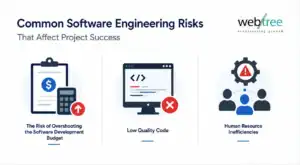
While obstacles in software development and implementation can arise at any point and in any form, the most common risks in software engineering include:
The Risk of Overshooting the Software Development Budget
One of the major concerns companies face is overshooting the budget or allocating more than required funds for the software project. Overshooting the budget can occur due to several reasons, including inaccurate estimation of funds or unplanned additions in the project.
Low Quality Code
Another common risk in software engineering is ending up with low-quality code that does not meet the company’s goals. Low-quality code can result in technical debts and an inability to scale with business growth.
Human Resource Inefficiencies
Software development requires a team of software engineers and coders, ensuring that the stages in the technology development meet expectations. Lack of human resources, gap in skills, and poor communication between team members can result in software risks in software engineering. Further, studies show that poor project planning and changing requirements remain among the leading causes of software project failure.
📖 Related Resource
Software development risk mitigation starts with choosing the right strategy, technology stack, and implementation roadmap. Learn how software development consulting helps businesses make informed decisions, optimize processes, and reduce project risks before development begins.
→ Software Development Consulting: Process, Benefits & Guide

How Software Consultants Reduce Software Development Risks in Business Projects
Software engineering risk management is crucial to ensure project success and business continuity. Software development consultants provide this surety for businesses intending to develop and integrate software solutions in their processes.
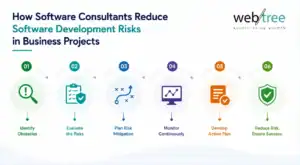
Typically, IT consultants follow a structured approach to assess risks, identify opportunities, and recommend solutions that align with business objectives.
Identification of Obstacles As Part of Software Development Risk Management
Firstly, consultants analyze the business processes to identify current and potential risks that may hinder the objectives of the software development project.
It is important to note that software consultants adopt proven risk identification techniques to identify potential risks in software development.
- They conduct interviews with various department heads and subject matter experts, gathering information on processes within the business setup.
- Software consultants brainstorm ideas and information with project members and experienced professionals to generate ideas and gather different perspectives on the project’s viability and possible challenges.
- They build prototypes to ensure design flaws and ambiguities are addressed, thereby leaving no more room for inaccurate budget allocation, time, and resources, thus avoiding risks.
Evaluate The Risks Based on the Severity of The Impact
Risk management in software engineering includes quantifying the impact of various risks. Whether the risk is present in the scope, timeline, or budget, software consultants measure the probability of risk and the severity of impact on the project’s goals.
The primary goal is to allocate limited resources effectively to minimize the risks. In other words, software consultants adopt a triage system to prioritize risk management that is more likely to have a great impact on project efficiency.
Devise Strategies to Mitigate the Impact of Risks
Planning risk mitigation in software development is important to reduce the impact of potential threats that may affect project timelines, budgets, quality, and overall business objectives. Software Consultants create a plan to successfully counter the negative threats affecting the project.
Monitoring the Software Project Throughout the Various Stages
After software development risk assessments, it is important to monitor the project throughout to detect new threats, identify triggers, and spot potential obstacles to eliminate them early.
Develop An Action Plan For Software Engineering Risk Management
As part of risk mitigation in software development, IT consultants devise an action plan, including taking appropriate action to mitigate threats. Each action is regularly documented and communicated to the client to ensure transparency and open discussions. Software consultants keep clients updated about the software project’s risks, status, potential obstacles, and possible solutions to mitigate the risks.
📚 Also Read
MVP Development Company India: The Complete Guide for Startups
Discover how startups validate ideas, minimize business risk, and launch products faster with a well-planned Minimum Viable Product.
Best Practices for Risk Management in Software Engineering
While developing software, companies or teams can choose to accept any one of the four risk mitigation strategies or practices:
- Avoidance: Where the company adopts proven and safe techniques to deliver software with no added features that may interfere with the existing software code.
- Mitigation: The company continuously monitors every stage of software development and implementation, identifying potential risks and adopting methods to mitigate them.
- Transfer: Handing over the entire project or part of the project to third-party experts for completion, thereby transferring risk wholly or partially.
Webtree Software Solutions: Secure Planning and Reliable Software
Successful software projects require proactive planning, continuous monitoring, and effective software development risk mitigation strategies. By identifying risks early and implementing structured risk management practices, businesses can improve software quality, stay within budget, and achieve project goals with confidence.

Webtree Software Solutions is a leading software development consultancy service company backed by risk management. We provide software consultancy services with secure planning, ensuring every line of code is accounted for. Our strategic software development techniques ensure future-ready software, minimizing risks and maximizing project success. Trust Webtree Software Solutions for software development risk management. Contact us today.
Frequently Asked Questions:
What is software development risk management?
Software development risk management is the process of identifying, assessing, and reducing potential risks that could affect a software project’s success.
Why is risk management important in software projects?
Risk management is important to reduce the risk of overshooting the budget, avoid project delays, and prevent software implementation failures and security issues.
What are the most common software development risks?
Some of the most common software development risks are technology challenges, changing requirements, surpassing deadlines, skill shortage, compliance risks, third party dependencies, and security vulnerabilities in software.
When should risk mitigation planning begin?
Risk mitigation planning should essentially start at the project planning stage and continue throughout the software development cycle.
What role does testing play in risk mitigation?
Regular testing helps identify defects early, reducing the chances of costly issues after implementation.
Can software development consultants help reduce project risks?
Yes. Experienced software consultants provide technical expertise, strategic planning, and risk management practices to improve project outcomes.
What is the biggest benefit of software risk mitigation?
Effective risk mitigation increases the likelihood of delivering high-quality software on time and within budget.