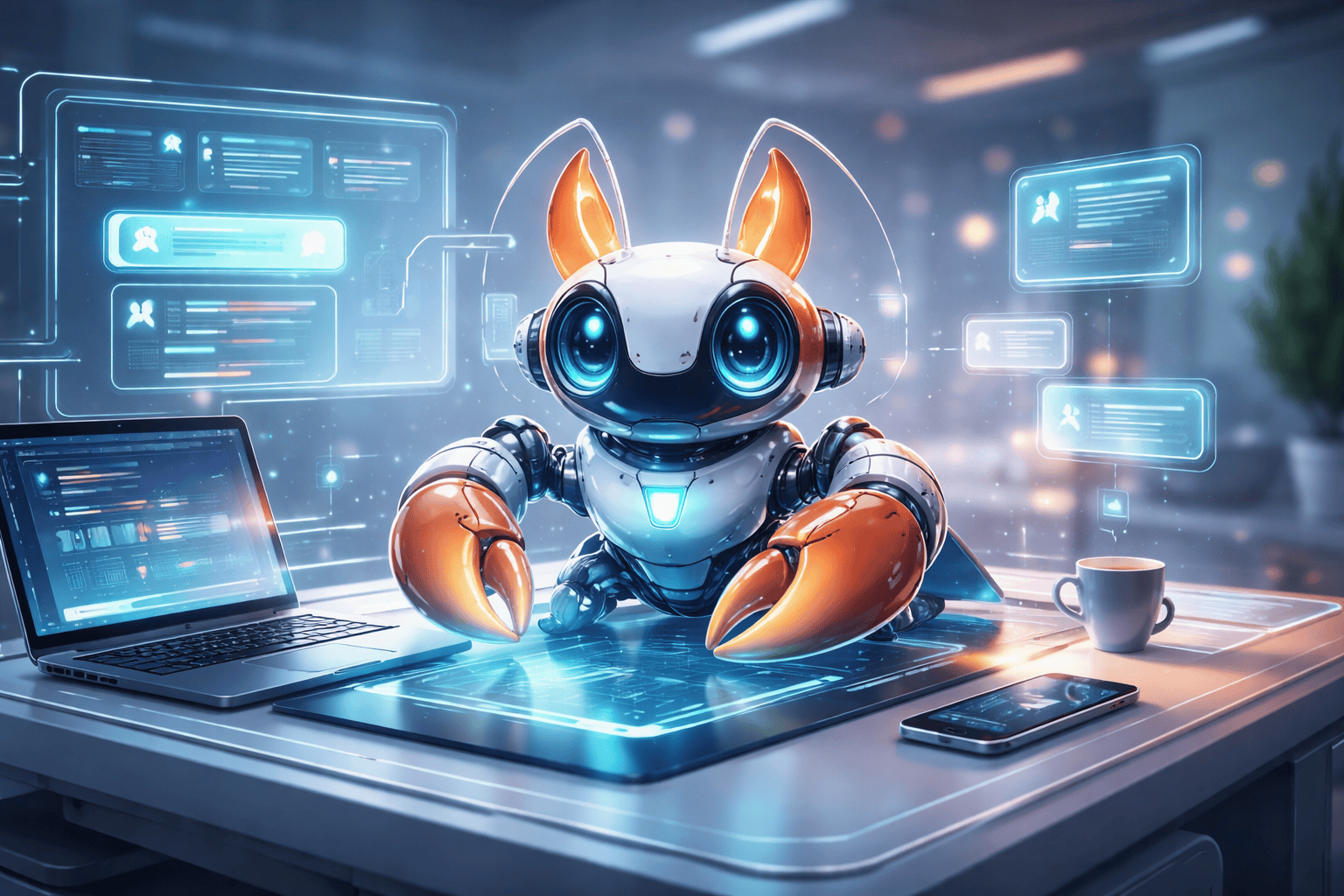
In the ever-evolving world of artificial intelligence, it takes something truly different to stand out. Surprisingly, that something turned out to be a lobster.
What began as Clawdbot, a quirky personal AI assistant with a crustacean theme, quickly went viral among developers and AI enthusiasts. Following a legal challenge from Anthropic, the project was renamed Moltbot—but its lobster soul, and its ambitious promise, remain intact.
Moltbot positions itself as “the AI that actually does things.” Unlike traditional AI chat tools, it goes beyond answering questions. It can manage calendars, send messages via apps, automate workflows, and even check users in for flights. This practical focus has fueled massive interest, despite the technical effort required to set it up.
From Burnout to Breakthrough: The Creator’s Story
Moltbot is the brainchild of Peter Steinberger, an Austrian developer and founder best known for PSPDFkit. After stepping away from that venture, Steinberger experienced a prolonged creative lull, barely touching his computer for nearly three years.
Eventually, the resurgence of interest in AI rekindled his passion. What started as a personal tool—originally called Clawd, or “Peter’s crusted assistant”—was built to help him manage his digital life and explore deeper human-AI collaboration. That internal experiment evolved into Moltbot, now supported by a growing community rather than a single developer.
Steinberger, a self-described “Claudoholic,” initially named the project after Anthropic’s Claude model. When trademark concerns arose, he rebranded quickly. The name changed—but the concept didn’t.
Why Developers Are Excited About Moltbot
To early adopters, Moltbot represents the next phase of AI assistants: action-oriented, autonomous, and customizable. For developers already using AI to generate code, apps, and websites, the idea of an assistant that can execute tasks is incredibly compelling.
That excitement explains Moltbot’s rapid rise to over 44,000 GitHub stars in a matter of weeks. The hype even spilled into financial markets, with renewed enthusiasm around infrastructure providers like Cloudflare, which developers commonly use to run Moltbot locally.
This level of traction highlights a growing appetite for AI agents that move beyond novelty and deliver real utility.
Open Source Power Comes With Real Risks
Despite the excitement, Moltbot is not without serious caveats.
On the positive side, it is open source, allowing anyone to inspect the code for vulnerabilities. It also runs locally—on your own computer or server—rather than sending data to the cloud, which offers a degree of privacy control.
However, its defining feature is also its biggest risk. An AI that can “actually do things” also has the ability to execute commands on your system. As investor Rahul Sood warned, this opens the door to potential misuse, including prompt injection attacks—where malicious messages could trick the assistant into taking unintended actions.
While careful configuration and model selection can reduce risk, the only foolproof method is running Moltbot in a tightly isolated environment, such as a siloed virtual private server (VPS).
Hype vs. Reality: Not for Casual Users—Yet
For experienced developers, these risks may be obvious and manageable. But as Moltbot’s popularity spreads beyond hardcore tinkerers, concerns are growing that less technical users may treat it too casually—similar to consumer tools like ChatGPT.
Steinberger himself encountered the darker side of virality when scammers hijacked variations of his project name to promote fake cryptocurrency schemes. His experience served as a reminder that visibility attracts bad actors just as quickly as fans.
At present, safely running Moltbot often means using separate machines and disposable accounts—hardly convenient for a tool meant to streamline everyday digital life. Resolving this tension between security and usability may require broader ecosystem solutions beyond any single developer’s control.
A Glimpse Into the Future of AI Agents
Despite its limitations, Moltbot is an important signal. By building a tool to solve his own problem, Steinberger demonstrated what AI agents are capable of when given real autonomy and purpose.
Moltbot may still be firmly in early-adopter territory, but it offers a compelling preview of a future where AI assistants are not just impressive conversationalists—but genuinely useful collaborators.
For now, curiosity is welcome—but caution is essential.
Ready to Build Smarter AI-Powered Solutions?
The rise of tools like Moltbot shows one thing clearly: AI is no longer about conversation—it’s about execution. Businesses that adopt intelligent automation early gain a serious competitive edge.
At Webtree Software Solutions, we help startups and enterprises design, develop, and deploy secure, scalable AI-powered applications, automation tools, and custom software solutions tailored to real-world use cases. Whether you’re exploring AI assistants, workflow automation, or next-gen digital products, our experts can turn ideas into reliable technology.
👉 Let’s build AI that actually works for your business.
Contact Webtree Software Solutions today to get started.