Key Takeaways
- Hospital workflow inefficiencies directly impact patient satisfaction, staff productivity, and revenue.
- Manual processes increase administrative workload and the risk of errors.
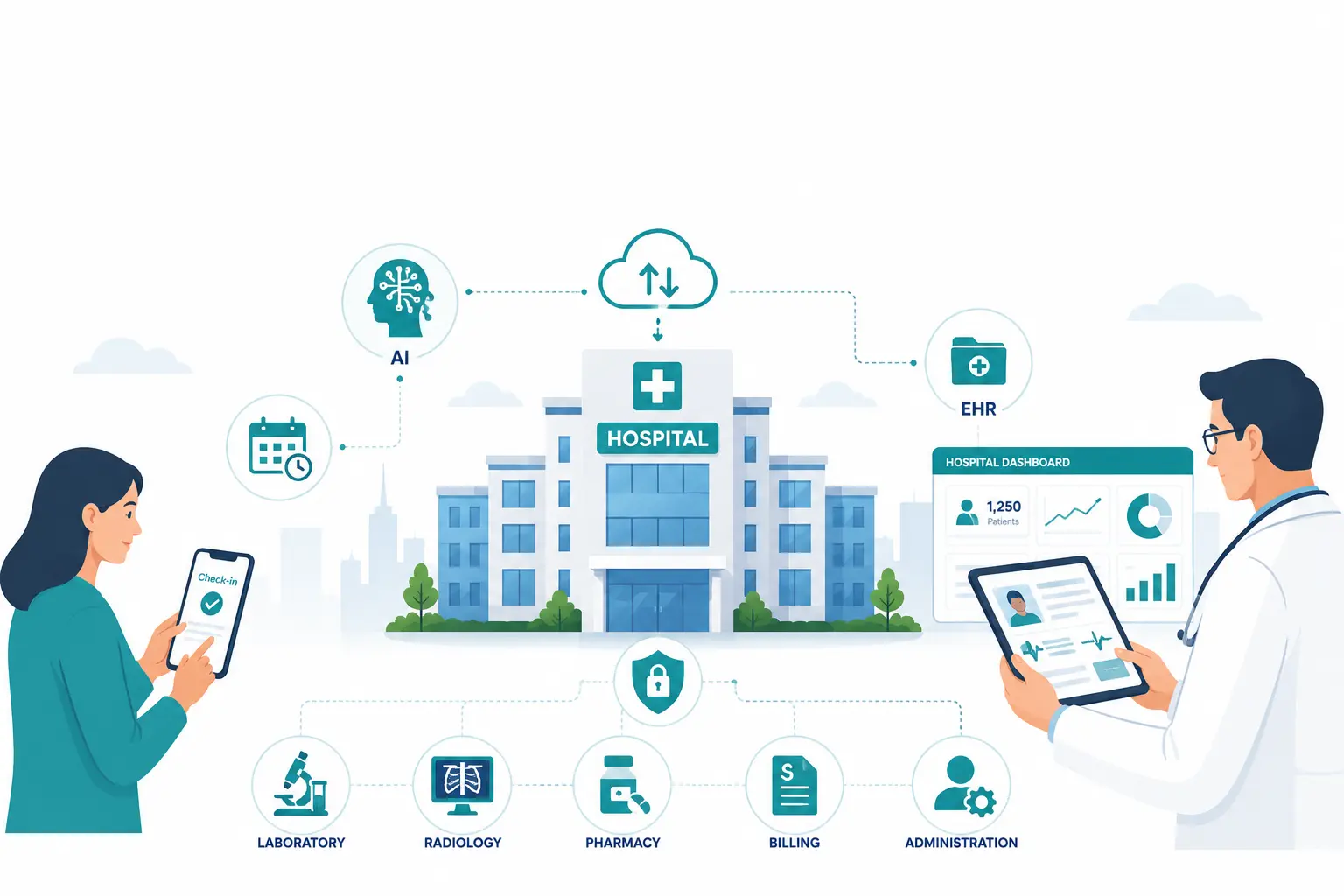
- Integrated healthcare software connects departments for seamless information sharing.
- Workflow automation reduces patient wait times and improves operational efficiency.
- AI, cloud technology, EHRs, and analytics enable faster, data-driven decision-making.
- Measuring KPIs helps hospitals maximize the return on digital transformation investments.
- A phased implementation approach ensures successful workflow automation with minimal disruption.
Modern hospitals manage thousands of interconnected tasks every day. From patient registration and appointment scheduling to diagnostics, treatment, pharmacy, billing, and discharge, every process depends on seamless coordination. When even one workflow slows down, it affects patient care, staff productivity, and hospital revenue.
Many healthcare organizations still rely on disconnected systems, manual paperwork, and outdated communication methods. These inefficiencies lead to longer waiting times, documentation errors, delayed treatments, and administrative burdens that leave healthcare professionals with less time for patients.
Digital technology is transforming how hospitals operate. Hospital Management Systems (HMS), Electronic Health Records (EHR), AI-powered automation, cloud platforms, and workflow management tools help healthcare providers streamline operations while delivering faster, safer, and more personalized patient care.
A recent HIMSS study found that healthcare organizations implementing digital transformation initiatives are reporting improvements in patient engagement, operational efficiency, and data-driven decision-making, with AI emerging as a core enabler of modern healthcare delivery.
In this guide, we’ll explore the biggest hospital workflow challenges, how technology addresses them, and the best practices for implementing digital transformation successfully.
Why Efficient Hospital Workflows Matter
Healthcare delivery has become increasingly complex. Hospitals are expected to provide faster care, maintain regulatory compliance, reduce operational costs, and deliver exceptional patient experiences simultaneously.
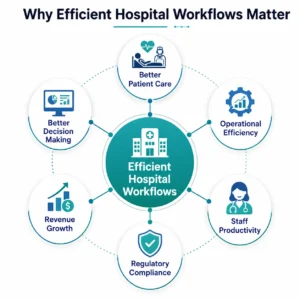
Several factors make workflow optimization essential.
Rising Patient Expectations
Patients today expect convenient appointment booking, shorter waiting times, digital access to medical records, and transparent communication throughout their healthcare journey. Delays or poor coordination often lead to dissatisfaction and lower patient retention.
Increasing Administrative Workload
Healthcare professionals spend a significant portion of their day completing documentation, updating records, managing insurance claims, and handling compliance requirements. Administrative tasks can reduce the time available for direct patient care.
Staff Shortages
Many hospitals face shortages of doctors, nurses, and administrative staff. Efficient workflows help existing teams manage higher patient volumes without compromising care quality.
Growing Compliance Requirements
Healthcare organizations must comply with strict regulations regarding patient data privacy, record management, reporting, and billing. Digital systems simplify compliance through automated documentation and secure data management.
Better Operational Efficiency
Efficient workflows reduce delays, improve communication, optimize resource allocation, and enhance coordination between departments. The result is improved patient outcomes and better financial performance.
“
💡 Expert Insight
“One of the biggest misconceptions in healthcare digital transformation is that workflow problems are solved by adding more staff. In reality, many inefficiencies stem from fragmented systems, duplicate data entry, and poor communication between departments. Hospitals that first redesign their workflows and then implement integrated technology typically achieve more sustainable improvements in efficiency and patient care.”
👨💻
Webtree Technology Team
Software Development • Mobile App Development • Web Development • Digital Transformation Experts
Addressing workflow inefficiencies requires more than isolated software upgrades. Hospitals need a structured strategy that aligns people, processes, and technology to create connected, patient-centric operations. Explore our Healthcare Digital Transformation Roadmap to learn how hospitals can assess digital maturity, prioritize technology investments, and implement transformation successfully.
The Most Common Hospital Workflow Challenges
Hospital operations involve multiple departments working together. Any bottleneck can create delays throughout the patient journey.
| Workflow Challenge | Business Impact |
|---|
| Manual registration | Longer waiting times |
| Paper records | Delayed diagnosis and treatment |
| Data silos | Poor collaboration |
| Scheduling issues | Missed appointments |
| Manual billing | Revenue leakage |
Let’s look at these challenges more closely.
Manual Patient Registration
Manual registration requires repetitive data entry, physical forms, and verification, leading to long queues and frustrated patients.
Paper-Based Documentation
Paper records are difficult to access, update, and share across departments. Missing or incomplete documentation can delay clinical decisions.
Communication Gaps Between Departments
Laboratories, radiology, pharmacy, billing, and clinical teams often work on separate systems, making information sharing slow and inconsistent.
Appointment Scheduling Problems
Manual scheduling increases the likelihood of double bookings, missed appointments, and inefficient physician utilization.
Long Patient Wait Times
Delays during registration, diagnostics, consultations, or discharge negatively affect patient satisfaction and hospital efficiency.
Bed Management Challenges
Without real-time visibility into bed availability, hospitals may struggle with patient admissions, transfers, and discharge planning.
Medication Errors
Manual prescriptions, incomplete patient records, and communication issues can increase medication-related risks.
Billing Delays
Insurance verification, claim processing, and manual billing workflows often extend payment cycles and increase administrative costs.
Limited Operational Visibility
Hospital administrators often lack real-time insights into patient flow, staff utilization, department performance, and operational bottlenecks.
How Technology Solves Hospital Workflow Challenges
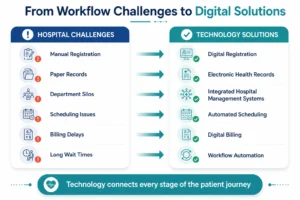
Modern healthcare technologies address operational challenges by connecting people, processes, and data.
| Challenge | Digital Solution | Business Benefit |
|---|
| Manual registration | Online registration & patient portals | Faster check-in |
| Paper documentation | Electronic Health Records (EHR) | Better information access |
| Communication gaps | Integrated Hospital Management System (HMS) | Improved collaboration |
| Appointment issues | Automated scheduling | Reduced no-shows |
| Billing delays | Digital billing systems | Faster reimbursements |
Hospital Management Systems (HMS)
A centralized HMS integrates patient registration, appointments, billing, pharmacy, diagnostics, inventory, and reporting into a single platform. Staff can access information instantly without switching between multiple systems.
Electronic Health Records (EHR)
EHRs provide healthcare professionals with complete patient histories, test results, medications, allergies, and treatment plans. This improves clinical decision-making while reducing duplicate documentation.
📊
📊 Industry Insight
According to McKinsey, administrative functions account for 15–25% of healthcare spending, and up to
half of administrative work can be automated when healthcare organizations redesign
workflows alongside AI and automation. This highlights why workflow transformation is as much about
process optimization as technology adoption.
AI-Powered Automation
Artificial intelligence automates repetitive administrative tasks such as appointment reminders, insurance verification, document processing, and predictive patient scheduling.
Patient Portals
Patients can book appointments, access medical records, receive prescriptions, view reports, and communicate with healthcare providers through secure self-service portals.
Mobile Applications
Doctors, nurses, and administrative staff can update patient information, receive alerts, approve requests, and manage workflows from mobile devices.
Workflow Notifications
Automated alerts notify departments about admissions, lab reports, medication approvals, discharge readiness, and emergency cases, reducing communication delays.
Analytics Dashboards
Real-time dashboards provide visibility into patient flow, waiting times, occupancy rates, financial performance, and departmental efficiency.
Cloud Integration
Cloud-based healthcare platforms improve accessibility, scalability, disaster recovery, and secure collaboration across multiple facilities.
Workflow Automation Across Every Hospital Department
True digital transformation goes beyond automating individual departments. It creates a connected healthcare ecosystem where information flows seamlessly.
Front Desk & Registration
Digital registration, online forms, and automated identity verification reduce waiting times and improve patient experiences.
Outpatient Clinics
Integrated scheduling, digital consultation notes, and automated follow-ups improve patient management.
Emergency Department
Real-time patient tracking and automated triage systems help prioritize critical cases quickly.
Laboratory
Automated test requests, digital reports, and direct integration with EHR systems eliminate manual paperwork.
Radiology
Imaging requests, reports, and physician notifications become faster through integrated systems.
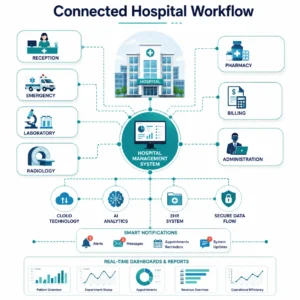
Pharmacy
Digital prescriptions reduce medication errors while improving inventory management.
Billing & Insurance
Automated insurance verification, digital invoicing, and electronic claims processing accelerate revenue collection.
Administration
Hospital administrators gain complete visibility into operational performance through centralized reporting and analytics.
Instead of optimizing individual departments independently, integrated healthcare software enables continuous information flow throughout the entire patient journey.
“
💡 Expert Insight
“The greatest return on healthcare technology investments comes from connecting systems rather than automating isolated tasks. When registration, clinical records, diagnostics, pharmacy, billing, and reporting operate as one integrated ecosystem, hospitals gain real-time visibility, reduce administrative delays, and enable clinicians to spend more time focusing on patient care instead of manual coordination.”
👨💻
Webtree Technology Team
Software Development • Mobile App Development • Web Development • Digital Transformation Experts
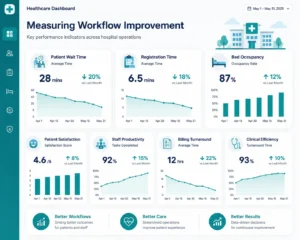
Measuring Workflow Improvement Success
Digital transformation should be measured using clear operational and business metrics.
| KPI | Before | After Digital Transformation |
|---|
| Patient wait time | Long | Reduced |
| Registration time | Manual | Automated |
| Bed occupancy visibility | Limited | Real-time |
| Appointment no-show rate | High | Lower |
| Billing turnaround | Slow | Faster |
| Documentation time | Time-consuming | Streamlined |
| Staff productivity | Moderate | Improved |
| Patient satisfaction | Variable | Higher |
| Clinical turnaround | Delayed | Faster |
Hospitals should regularly monitor:
- Average patient wait time
- Registration completion time
- Bed occupancy rate
- Appointment utilization
- Billing turnaround time
- Documentation accuracy
- Staff productivity
- Patient satisfaction scores
- Clinical turnaround times
Tracking these KPIs helps leadership evaluate ROI, identify improvement opportunities, and ensure continuous optimization.
Best Practices for Implementing Hospital Workflow Automation
Successful digital transformation requires thoughtful planning and stakeholder engagement.
Assess Existing Workflows
Identify bottlenecks, manual processes, duplicate tasks, and communication gaps before selecting technology.
Prioritize High-Impact Processes
Start with areas that deliver immediate value, such as registration, appointment scheduling, or billing.
Launch Pilot Projects
Implement workflow automation in one department before expanding hospital-wide.
Train Healthcare Staff
Technology adoption depends on proper training and user confidence. Continuous support improves long-term success.
Integrate Existing Systems
Choose solutions that integrate with current Hospital Management Systems, EHR platforms, laboratory software, and billing applications.
Monitor Performance
Track KPIs regularly to measure efficiency gains and identify new optimization opportunities.
Continuously Improve
Healthcare workflows evolve over time. Regular reviews ensure systems continue meeting organizational needs.
Hospital Workflow Automation Readiness Checklist
- Current workflow assessment completed
- High-impact areas identified
- Leadership support established
- Staff training planned
- Integration strategy defined
- Security and compliance reviewed
- KPI measurement framework created
- Continuous improvement plan established
Why Healthcare Organizations Choose Webtree
Healthcare providers need technology partners who understand both software development and the operational realities of modern hospitals. At Webtree, we build custom healthcare solutions designed to simplify complex workflows, improve collaboration, and support better patient outcomes.
Our healthcare technology expertise includes:
- Custom Hospital Management Systems (HMS)
- Workflow automation solutions
- Patient management platforms
- Secure web and mobile healthcare applications
- Integration with existing healthcare systems
- Cloud-based healthcare software
- Business intelligence and analytics dashboards
- Long-term support and technology consulting
Rather than offering one-size-fits-all software, we work closely with healthcare organizations to understand their workflows, identify operational challenges, and develop scalable solutions that align with their clinical and business goals.
Whether you’re looking to modernize patient registration, automate billing, connect departments, or build a fully integrated digital healthcare ecosystem, Webtree delivers technology that helps hospitals operate more efficiently while keeping patient care at the center. Get in touch with us.
Frequently Asked Questions
What is the biggest workflow challenge faced by hospitals today?
One of the biggest challenges is the lack of integration between departments, leading to communication gaps, manual processes, and delays throughout the patient journey.
How can hospitals automate workflows without disrupting patient care?
A phased implementation approach works best. Start with a pilot department, train staff thoroughly, integrate existing systems, and expand gradually while monitoring performance.
Which hospital departments benefit the most from workflow automation?
Front desk operations, outpatient clinics, emergency departments, laboratories, radiology, pharmacy, billing, and administration all benefit from improved coordination and automation.
How long does it take to implement hospital workflow automation?
The timeline depends on the hospital’s size, existing systems, and project scope. Smaller implementations may take a few months, while enterprise-wide transformations often take longer and are rolled out in phases.
Can existing hospital systems be integrated with new digital solutions?
Yes. Modern healthcare platforms are designed to integrate with Hospital Management Systems, EHRs, laboratory software, pharmacy systems, and billing applications, reducing the need for complete system replacement.
How can hospitals measure the success of workflow optimization initiatives?
Hospitals should track key performance indicators such as patient wait times, registration time, appointment utilization, billing turnaround, documentation accuracy, staff productivity, bed occupancy, and patient satisfaction to evaluate the impact of digital transformation.