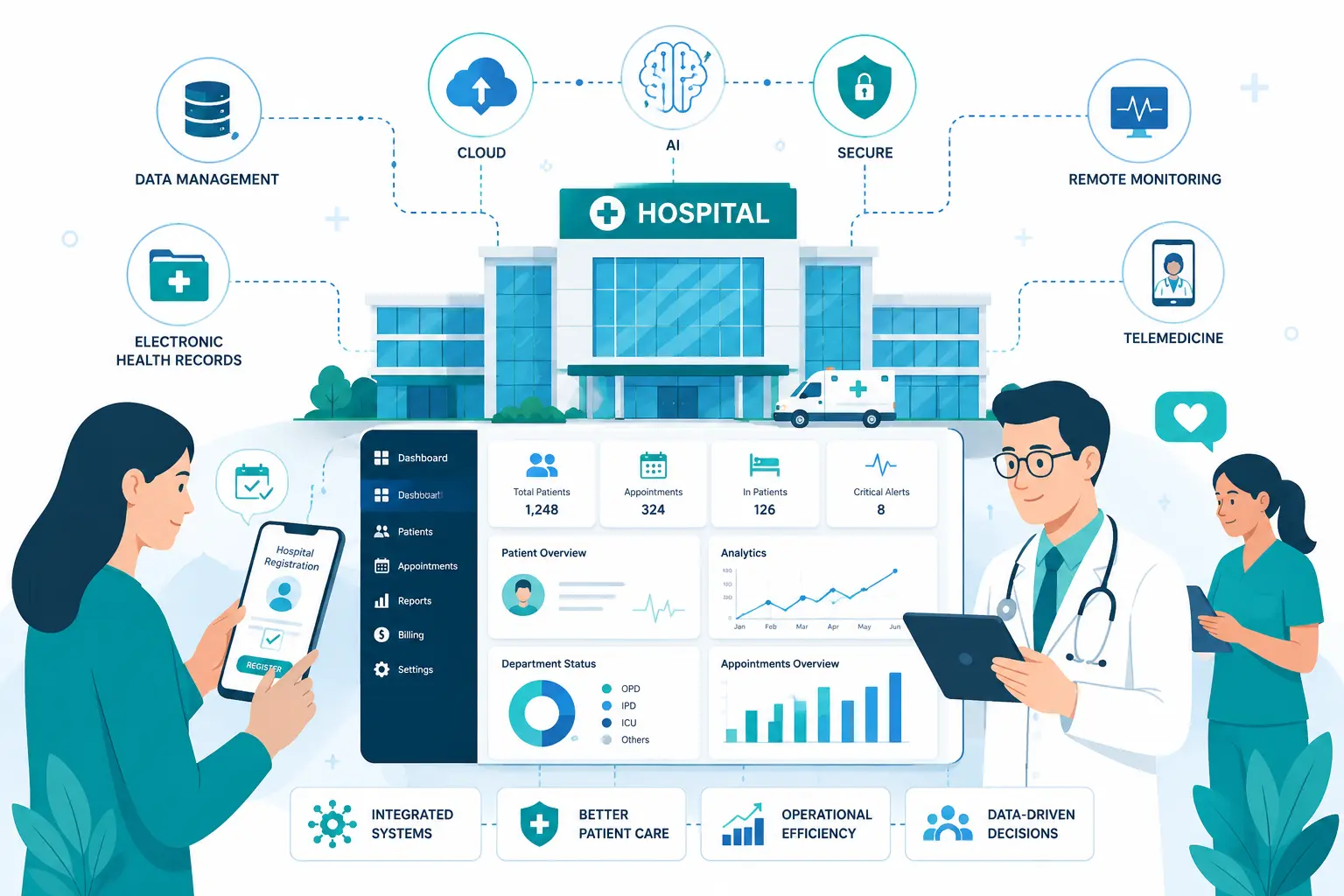
Key Takeaways
- Digital transformation is no longer a future initiative. It is a strategic necessity for hospitals seeking to improve patient outcomes, operational efficiency, and financial performance.
- Successful transformation starts with assessing your hospital’s current digital maturity.
- Mapping the patient journey helps identify bottlenecks and opportunities for automation.
- Technologies such as Hospital Information Management Systems (HIMS), Electronic Health Records (EHR), Artificial Intelligence (AI), Telemedicine, IoT, Cloud Computing, and Data Analytics are reshaping healthcare delivery.
- A phased implementation approach reduces risks and ensures better adoption across departments.
- Choosing the right technology partner is critical for long-term success.
Why Digital Transformation Is No Longer Optional for Hospitals
Healthcare is undergoing a fundamental shift. Rising patient expectations, increasing regulatory requirements, growing data volumes, and operational pressures are pushing hospitals to rethink how care is delivered.
Patients today expect the same level of convenience from healthcare providers that they receive from banking, retail, and travel services. They want online appointment scheduling, digital medical records, teleconsultations, faster billing, and seamless communication throughout their healthcare journey.
At the same time, hospitals are facing challenges such as workforce shortages, increasing administrative workloads, fragmented systems, and escalating healthcare costs. Traditional manual processes are no longer sufficient to meet these demands.
Digital transformation enables healthcare organizations to streamline operations, improve patient experiences, enhance clinical decision-making, and create more connected healthcare ecosystems.
This shift is reflected globally. According to Deloitte’s 2025 Global Health Care Outlook, digital transformation is the top strategic priority for many health systems, with healthcare leaders increasing investments in technologies such as Electronic Medical Records (EMRs), ERP platforms, AI, and cloud-based solutions to improve efficiency and patient care.
Some of the key benefits include:
- Faster patient registration and onboarding
- Reduced administrative workload
- Improved clinical coordination
- Better access to patient data
- Enhanced patient engagement
- Increased operational efficiency
- Improved regulatory compliance
- Data-driven decision making
- Better healthcare outcomes
Hospitals that delay digital transformation risk falling behind competitors that are already leveraging technology to deliver more efficient and patient-centered care.
Assess Your Hospital’s Digital Maturity Before Investing
One of the biggest mistakes hospitals make is investing in technology without understanding their current digital capabilities.
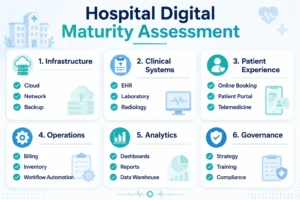
Before selecting new software platforms or launching transformation initiatives, healthcare leaders should conduct a comprehensive digital maturity assessment.
This assessment helps identify existing gaps, prioritize investments, and create a realistic implementation of roadmap.
Digital Maturity Assessment Checklist
Use the following checklist to evaluate your organization’s readiness:
Infrastructure
- Reliable network infrastructure
- Secure cloud capabilities
- Data backup and disaster recovery systems
- Cybersecurity framework in place
Clinical Systems
- Electronic Health Records implemented
- Digital patient records accessible across departments
- Integrated laboratory systems
- Integrated radiology systems
Patient Experience
- Online appointment scheduling
- Patient portal access
- Telemedicine capabilities
- Digital payment options
Operations
- Automated billing processes
- Digital inventory management
- Workflow automation
- Real-time reporting capabilities
Data & Analytics
- Centralized healthcare data repository
- Clinical dashboards
- Performance analytics
- Predictive reporting capabilities
Governance
- Digital transformation strategy documented
- Leadership sponsorship established
- Data governance framework
- Staff training programs available
The more boxes your hospital can confidently check, the more digitally mature your organization is likely to be.
A maturity assessment creates a baseline that guides future investments and prevents costly technology decisions.
Mapping the Complete Patient Journey for Digital Transformation
Successful healthcare transformation should always begin with the patient journey.
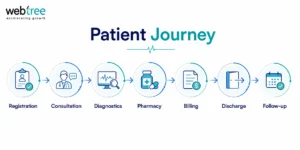
Rather than implementing technology for technology’s sake, hospitals should identify every patient touchpoint and determine where digital solutions can improve experiences and efficiency.
A patient’s journey through a healthcare facility typically flows from registration to consultation, diagnostic testing, pharmacy, billing, discharge and ongoing follow-up, with each stage presenting opportunities to improve efficiency and patient experience.
Registration
Digital registration systems reduce paperwork, shorten waiting times, and improve data accuracy.
Potential digital solutions include:
- Online pre-registration
- Self-service kiosks
- Mobile patient apps
- Digital document management
Consultation
Digital consultations improve care coordination and physician productivity.
Potential solutions include:
- Electronic Health Records
- Clinical decision support systems
- Telemedicine platforms
- AI-assisted documentation
Diagnostics
Integrated diagnostic systems enable faster diagnosis and improved collaboration.
Potential solutions include:
- Laboratory Information Systems
- Radiology Information Systems
- Digital imaging platforms
- Automated result reporting
Pharmacy
Digital pharmacy management improves medication safety and inventory control.
Potential solutions include:
- E-prescriptions
- Medication management systems
- Automated dispensing
- Inventory tracking
Billing
Automated billing reduces errors and improves revenue cycle management.
Potential solutions include:
- Digital invoicing
- Insurance integration
- Automated claims processing
- Online payments
Discharge
Digital discharge workflows improve continuity of care.
Potential solutions include:
- Digital discharge summaries
- Automated patient instructions
- Care coordination platforms
Follow-Up
Digital engagement strengthens long-term patient relationships.
Potential solutions include:
- Remote monitoring
- Patient portals
- Appointment reminders
- Telehealth follow-ups
By identifying digital opportunities across the entire patient journey, hospitals can prioritize initiatives that generate the highest impact.
 The Essential Technologies Driving Digital Healthcare
Healthcare digital transformation is powered by multiple interconnected technologies. Together, these technologies create a modern healthcare ecosystem that supports patient-centered care and operational excellence.
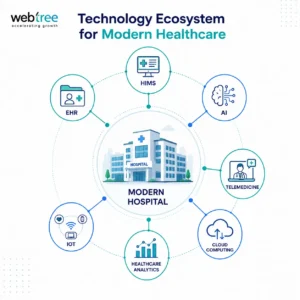
Hospital Information Management Systems (HIMS)
HIMS acts as the operational backbone of a hospital by managing patient registration, appointments, billing, inventory, human resources, and administrative workflows.
Benefits include:
- Centralized operations
- Reduced manual work
- Improved resource utilization
- Better reporting and visibility
Electronic Health Records (EHR)
Electronic Health Records provide a comprehensive digital view of a patient’s medical history, treatments, medications, laboratory results, and clinical notes.
Benefits include:
- Improved clinical decision-making
- Better care coordination
- Reduced documentation errors
- Enhanced patient safety
Telemedicine
Telemedicine enables healthcare providers to deliver consultations remotely using secure digital platforms.
Benefits include:
- Expanded access to care
- Reduced patient travel
- Improved follow-up compliance
- Greater convenience
Artificial Intelligence (AI)
AI is increasingly being used to improve healthcare operations and clinical outcomes.
Applications include:
- Diagnostic assistance
- Predictive analytics
- Medical image analysis
- Clinical documentation automation
- Patient risk assessment
Internet of Things (IoT)
Connected medical devices provide real-time health data that supports proactive care.
Examples include:
- Remote patient monitoring devices
- Wearable health trackers
- Smart infusion pumps
- Connected diagnostic equipment
Cloud Computing
Cloud platforms provide scalable infrastructure for healthcare organizations while supporting secure data storage and collaboration.
Benefits include:
- Scalability
- Lower infrastructure costs
- Improved accessibility
- Faster deployment
Healthcare Analytics
Healthcare organizations generate enormous volumes of data every day. Analytics platforms transform this information into actionable insights.
Benefits include:
- Operational visibility
- Clinical performance tracking
- Resource optimization
- Population health management
Measure, Optimize, and Scale
Digital transformation doesn’t end after implementation.
Regularly monitor performance metrics, collect stakeholder feedback, and identify areas for continuous improvement.
As your digital maturity increases, hospitals can introduce advanced capabilities such as:
- AI-assisted diagnostics
- Predictive analytics
- Remote patient monitoring
- Automated resource planning
- Personalized patient engagement
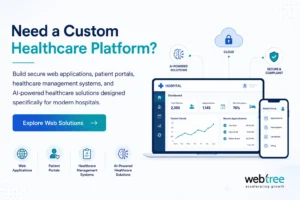
Once you’ve identified the digital capabilities your hospital needs, the next critical decision is whether to build custom healthcare software or buy an existing platform. The right choice depends on your workflows, budget, compliance requirements, and long-term digital transformation goals.
Common Digital Transformation Mistakes Hospitals Should Avoid
Even well-planned initiatives can face challenges if common mistakes are overlooked.
| Common Mistake | Better Approach |
|---|
| Buying technology without a strategy | Begin with a digital maturity assessment and technology roadmap. |
| Digitizing inefficient workflows | Optimize processes before introducing automation. |
| Ignoring clinician feedback | Involve healthcare professionals throughout planning, development, and implementation. |
| Choosing software that cannot integrate | Select interoperable, API-enabled solutions that support seamless integration. |
| Focusing only on technology | Invest equally in people, processes, training, and technology adoption. |
| Delaying cybersecurity planning | Build security into every phase of implementation rather than treating it as an afterthought. |
| Measuring only implementation progress | Track clinical, operational, financial, and patient outcomes to measure long-term success. |
Avoiding these pitfalls significantly increases the likelihood of long-term success.
KPIs Every Hospital Should Track After Digital Transformation
Tracking measurable outcomes ensures that technology investments deliver tangible value.
| KPI | Why It Matters |
|---|
| Average Patient Waiting Time | Measures operational efficiency and identifies opportunities to reduce patient wait times. |
| Appointment Booking Time | Indicates improvements in scheduling processes and patient accessibility. |
| Patient Satisfaction Score | Reflects the overall patient experience and quality of healthcare services. |
| Digital Appointment Adoption | Measures patient engagement with digital healthcare services. |
| Length of Hospital Stay | Helps evaluate clinical efficiency and effectiveness of patient care. |
| Billing Turnaround Time | Indicates financial performance and operational efficiency. |
| Readmission Rate | Measures the quality of care and treatment outcomes. |
| Electronic Prescription Usage | Tracks clinician adoption of digital healthcare technologies. |
| Staff Productivity | Evaluates workflow improvements and workforce efficiency. |
| System Uptime | Ensures operational reliability and uninterrupted access to healthcare systems. |
Monitoring these KPIs enables hospitals to refine processes and maximize return on investment.
Selecting the right technologies is just as important as choosing the right implementation partner. If patient engagement is a priority, understanding CRM capabilities can help you make informed investment decisions. Read our guide on how to choose the right healthcare CRM system before evaluating healthcare technology vendors
How to Choose the Right Digital Transformation Partner
Selecting the right technology partner is just as important as selecting the right software.
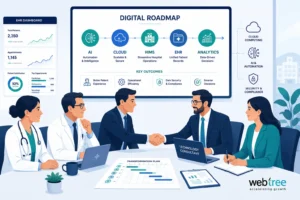
Look for a partner that understands both healthcare operations and enterprise technology.
Partner Evaluation Checklist
- Experience in healthcare software development
- Custom software capabilities
- Strong cybersecurity practices
- Knowledge of healthcare compliance requirements
- Integration expertise with third-party systems
- Cloud and AI implementation experience
- User-friendly UI/UX design
- Long-term maintenance and support
- Scalable architecture for future growth
- Proven implementation methodology
A reliable technology partner should not only build software but also guide hospitals through planning, implementation, integration, training, and continuous optimization.
Why Healthcare Organizations Choose Webtree
Healthcare organizations require technology partners who understand the complexity of hospital operations and the importance of delivering secure, reliable, and scalable solutions.
At Webtree, we combine healthcare expertise with modern software engineering to help hospitals accelerate their digital transformation journey.
Our capabilities include:
- Custom healthcare software development
- Hospital Information Management Systems (HIMS)
- Electronic Health Record (EHR) solutions
- Patient portals and mobile applications
- Telemedicine platforms
- AI-powered healthcare automation
- Secure cloud-based healthcare solutions
- Healthcare data analytics and reporting
- Seamless third-party system integrations
- Long-term maintenance, support, and scalability
Whether you’re modernizing a single department or transforming an entire healthcare network, Webtree delivers tailored digital solutions that align with your operational goals and future growth. Get in touch with us.
Conclusion
Digital transformation is redefining how hospitals deliver care, manage operations, and engage with patients. Organizations that take a strategic, phased approach are better equipped to improve clinical outcomes, streamline workflows, and adapt to the evolving healthcare landscape.
By assessing digital maturity, mapping the patient journey, investing in the right technologies, and partnering with experienced healthcare technology providers, hospitals can build a future-ready digital ecosystem that supports both operational excellence and exceptional patient care.
Whether your organization is beginning its digital transformation journey or expanding existing digital capabilities, a well-defined roadmap will ensure every technology investment contributes to long-term success.
Frequently Asked Questions
How long does digital transformation take for a hospital?
The timeline depends on the size of the hospital, the complexity of existing systems, and the scope of implementation. While smaller projects may take a few months, large-scale digital transformation initiatives are typically implemented in phases over one to three years.
Can small and mid-sized hospitals adopt digital transformation?
Yes. Digital transformation is not limited to large healthcare organizations. Small and mid-sized hospitals can begin with essential solutions such as digital appointment scheduling, patient portals, electronic health records, and cloud-based management systems, then expand as their needs grow.
How can hospitals measure ROI from digital transformation?
Hospitals can evaluate return on investment by tracking improvements in patient satisfaction, operational efficiency, reduced administrative costs, clinician productivity, billing accuracy, and overall quality of care using defined performance indicators.
Should hospitals migrate everything to the cloud at once?
Not necessarily. A phased cloud migration strategy is generally more effective. It minimizes operational risks, allows thorough testing, and ensures staff can adapt to new systems while maintaining uninterrupted patient care.
How can legacy hospital systems be modernized without disrupting operations?
Legacy systems can be modernized through phased upgrades, API integrations, cloud migration, and gradual replacement of outdated applications. This approach reduces downtime while maintaining continuity of care.
What role does AI play after a hospital has completed digital transformation?
Once digital systems are established, AI can enhance clinical decision-making, automate administrative tasks, predict patient risks, optimize resource allocation, improve diagnostic accuracy, and deliver more personalized patient experiences.