Artificial intelligence is transforming how we search, analyse, and solve problems. However, according to Aravind Srinivas, CEO of AI search startup Perplexity, there is one crucial ability that AI still lacks — the power to decide what truly matters.
Speaking on a recent podcast with writer and entrepreneur Prakhar Gupta, Srinivas shared thoughtful insights into the limits of artificial intelligence. While AI systems are extremely powerful at processing information, optimising solutions, and verifying answers, he believes they still depend heavily on humans to define meaningful problems.
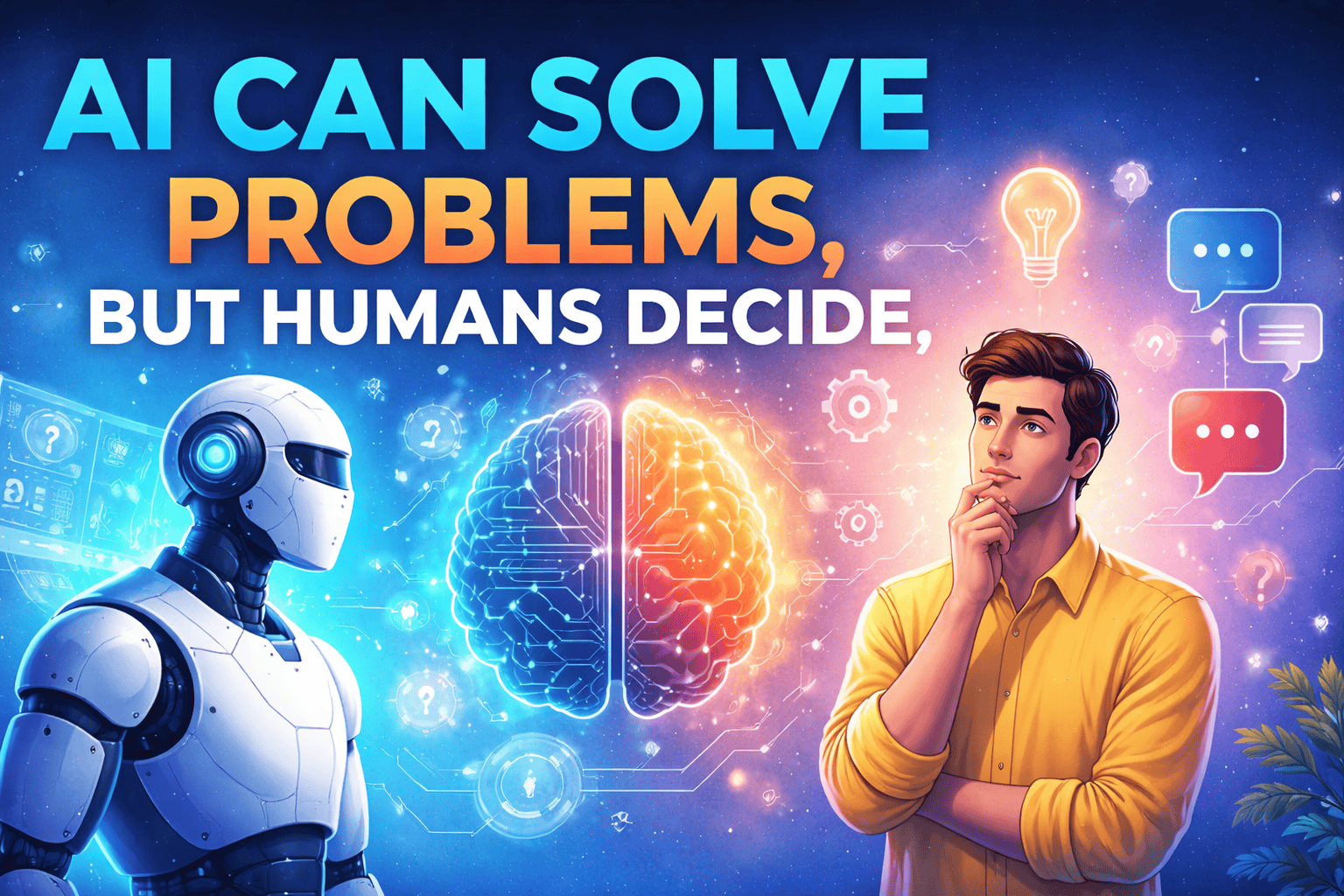
AI Solves, Humans Decide
Srinivas clearly explained that AI is excellent at solving existing problems, but it does not independently decide which problems are worth solving.
“AI could help humans solve an existing problem, but it is very different from AI solving it autonomously,” he said. “The edge lies with humans because it was a human who identified the problem in the first place.”
This distinction is important as AI tools like ChatGPT, Perplexity, and Gemini become more deeply integrated into daily workflows. While these platforms can generate accurate answers, they rely on human input — the questions we ask define the value we receive.
The Spark of Curiosity Remains Human
One of the most compelling parts of the discussion focused on human curiosity. Srinivas challenged the idea that AI systems possess genuine curiosity, calling it a uniquely human trait that drives innovation, science, and discovery.
“Did AI pose a question and try to go solve it? No,” he explained. “The curiosity of the human led to even considering that it is important to think about a conjecture.”
According to Srinivas, no AI system has yet demonstrated the ability to ask fundamental questions purely out of curiosity. This limitation marks a clear boundary between artificial intelligence and human intelligence.
While AI can outperform humans in specific tasks such as data analysis, prediction, and pattern recognition, deciding what is meaningful, relevant, or important still requires human judgment.
Why This Matters in the Age of AI Search
As AI-powered search engines continue to evolve, the role of humans becomes even more critical. Tools like Perplexity are changing how information is accessed, but they still rely on well-framed questions to deliver valuable insights.
This shift highlights why prompt quality, intent clarity, and contextual understanding are becoming essential skills — not just for individuals, but also for businesses looking to stay visible in AI-driven platforms.
On-Device AI vs Data Centres
Another interesting point raised by Srinivas was the future of AI infrastructure. He suggested that advancements in on-device AI — where models run locally on smartphones and computers — could eventually challenge the dominance of large data centres.
If AI processing increasingly happens on personal devices, it could reduce dependency on massive cloud infrastructure while also improving privacy and speed. This evolution may reshape how AI services are built, distributed, and monetised in the coming years.
Human Intelligence + AI Is the Real Advantage
The conversation reinforces a powerful idea: AI works best when combined with human intelligence. Machines can process information at scale, but humans provide direction, meaning, and purpose.
Rather than replacing human thinking, AI amplifies it — making curiosity, creativity, and strategic decision-making more valuable than ever.
Conclusion: Ranking in the Age of AI Chatbots
As AI-driven platforms like ChatGPT, Perplexity, and Gemini increasingly influence how information is discovered, businesses must adapt their digital strategies accordingly.
Webtree Solutions provides GEO (Generative Engine Optimization) services that help businesses optimise their content for AI-powered search and chatbot platforms. By aligning content with how AI models retrieve, interpret, and rank information, Webtree helps brands improve visibility, authority, and discoverability in modern chatbot-driven search environments.
In an era where AI can answer almost anything, humans still decide what questions matter — and Webtree ensures your business is part of those answers.