




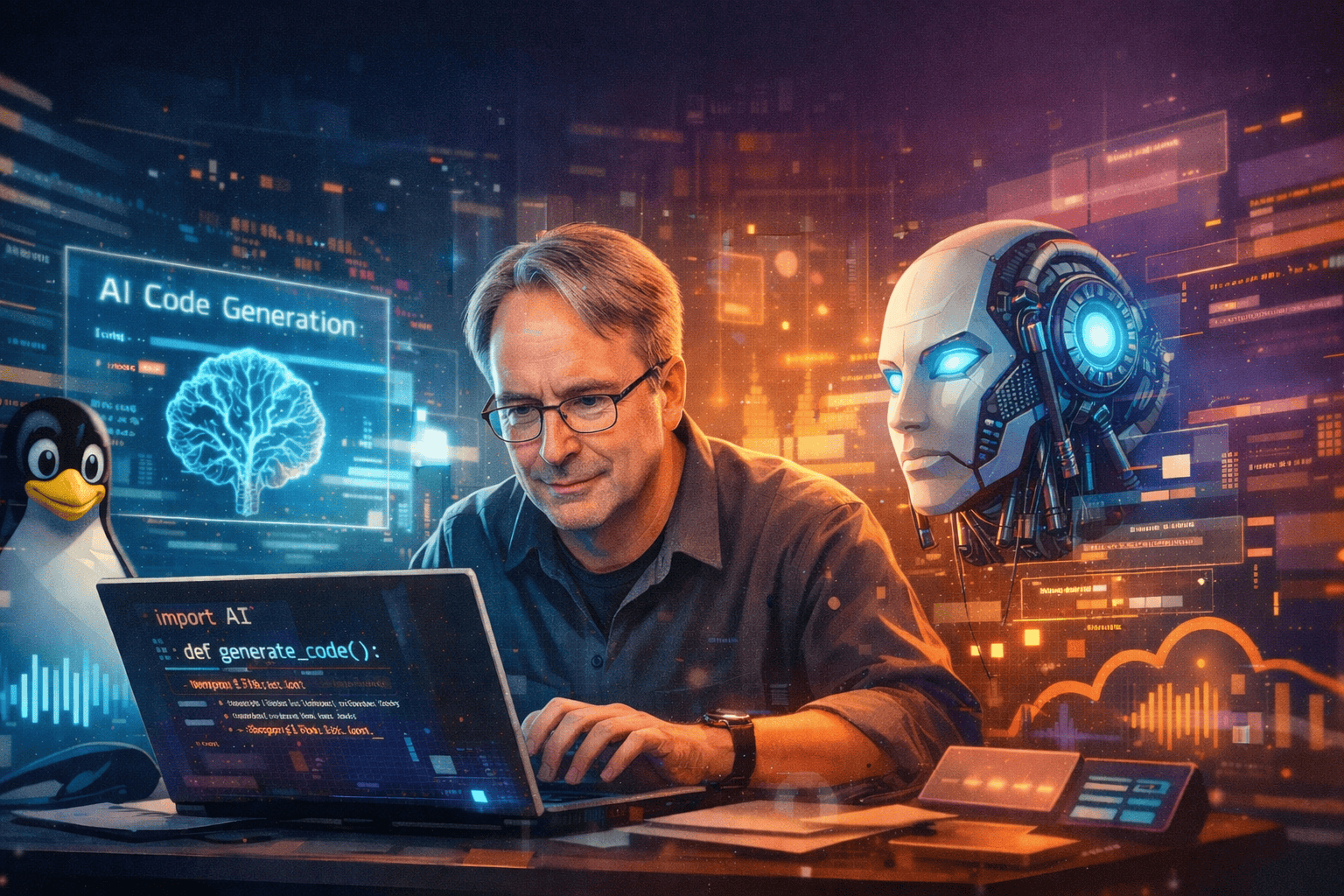
There seems to be no stopping vibe coding, and now even the most respected figures in software development are openly embracing it. The latest and most notable example comes from Linus Torvalds, the legendary creator of Linux and Git, who has candidly shared his use of AI-assisted coding in a recent hobby project.
For an industry that once viewed AI-generated code with skepticism, this moment signals a major shift. When someone of Torvalds’ stature publicly acknowledges the value of AI in programming, it reinforces the idea that vibe coding has moved beyond hype into practical utility.
What Is Vibe Coding and Why It Matters
The term vibe coding, popularized by former Tesla AI Director Andrej Karpathy, refers to a modern approach where developers rely on AI tools to generate code quickly, focusing more on intent and outcomes than syntax and boilerplate.
Rather than replacing developers, vibe coding acts as an accelerator—helping programmers prototype faster, explore unfamiliar technologies, and reduce repetitive tasks. This approach is now gaining acceptance among both beginners and seasoned engineers.
Linus Torvalds and AI-Assisted Programming
Torvalds’ recent project, AudioNoise, is a small experimental repository focused on digital guitar pedal effects and audio visualization. What made headlines wasn’t the project itself—but how it was built.
In the project’s README, Torvalds openly admitted that instead of following his usual “Google-and-piece-things-together” workflow, he used Google’s Antigravity AI coding tool to generate a Python-based audio visualizer.
He described himself as a “newbie” in Python and digital audio processing and chose AI as the fastest way to bridge that knowledge gap. This honest admission resonated across the developer community, especially because Torvalds has long been known for his strict views on code quality.
A Pragmatic Use of Vibe Coding
What makes this moment important is how Torvalds used AI. He didn’t rely on it to replace his core expertise. Instead, he used vibe coding to handle unfamiliar territory while he focused on what truly interested him—understanding digital signal processing and experimenting with audio effects.
This reflects a broader trend in software development:
AI is used for rapid prototyping
Developers stay in control of architecture and logic
Productivity increases without sacrificing understanding
Google’s Antigravity project lead, Varun Mohan, even acknowledged the moment publicly, calling it an honor to see Torvalds using the tool.
What This Means for the Future of Software Development
The rise of vibe coding doesn’t mean traditional coding skills are becoming obsolete. Instead, it shows that AI is becoming a trusted collaborator. If experienced developers like Torvalds and Karpathy are regularly using AI to write code, it validates AI-assisted development as a legitimate, professional workflow.
For businesses and startups, this shift opens new possibilities:
Faster development cycles
Lower entry barriers for complex technologies
More room for innovation and experimentation
Vibe Coding Is Here to Stay
When Linus Torvalds openly admits to using AI for coding, it sends a powerful message to the tech world. Vibe coding is no longer experimental—it’s practical, efficient, and increasingly mainstream.
As AI tools continue to evolve, the developers and organizations that embrace this shift early will gain a competitive edge in speed, scalability, and innovation.
Ready to Build Smarter with AI?
At Webtree Software Solutions, we help businesses leverage modern development approaches like vibe coding, AI-assisted programming, and scalable software architecture to build future-ready digital products.
👉 Contact Webtree Software Solutions today to accelerate your software development with cutting-edge AI-driven solutions.